The first step in making cave art is finding the right stone. Slate is great for line work and carving. Limestone and sandstone absorb paint well. Quartz can be difficult to paint on but imparts a unique shine to paint.

Stone is obviously heavy. Prehistoric artists were no dummies, that’s why they chose to paint in caves and overhangs (at least that’s where it’s been preserved). Choose stone slabs that are between 1 and 5 cm thick (or about .25 to2 inches) so your canvas is strong but not too heavy.
Use a hammer and chisel to shape the stone to suit your design. Wet the stone and rub the edges with another stone. This smooths down corners and removes sharp edges.

Cave artists used cave water and mineral pigments for paintings. Iron oxide can be a variety of colors from yellow, red and green to black. Umber can be brown, red or black. Black manganese is, as you might guess, black. I use airbrush paint on my stones in the pigment minerals that were available to paleolithic artists. Airbrush paint is fine-grain pigment that gets absorbed into the stone without plastic residue like acrylic paint, but can be layered.
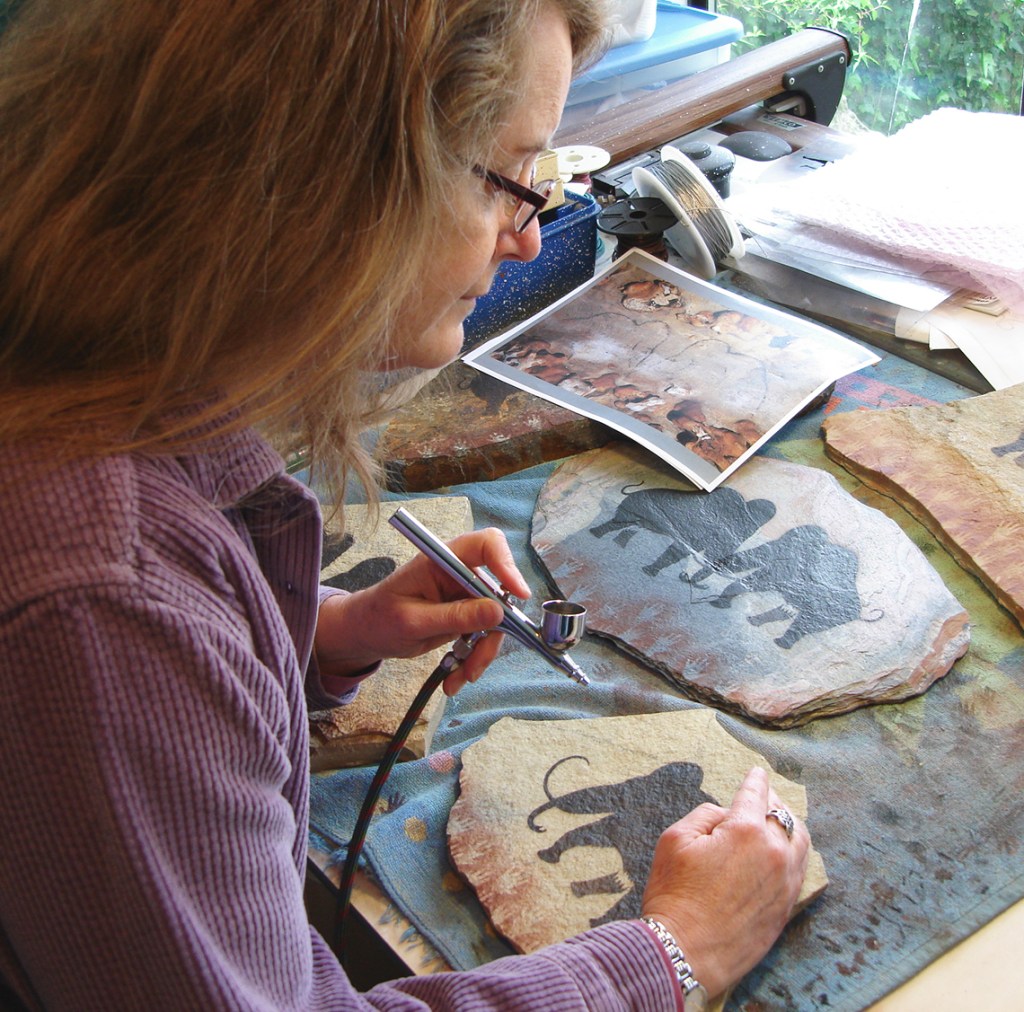
Working on a mammoth painting, I’m using my hand as a mask for the paint.
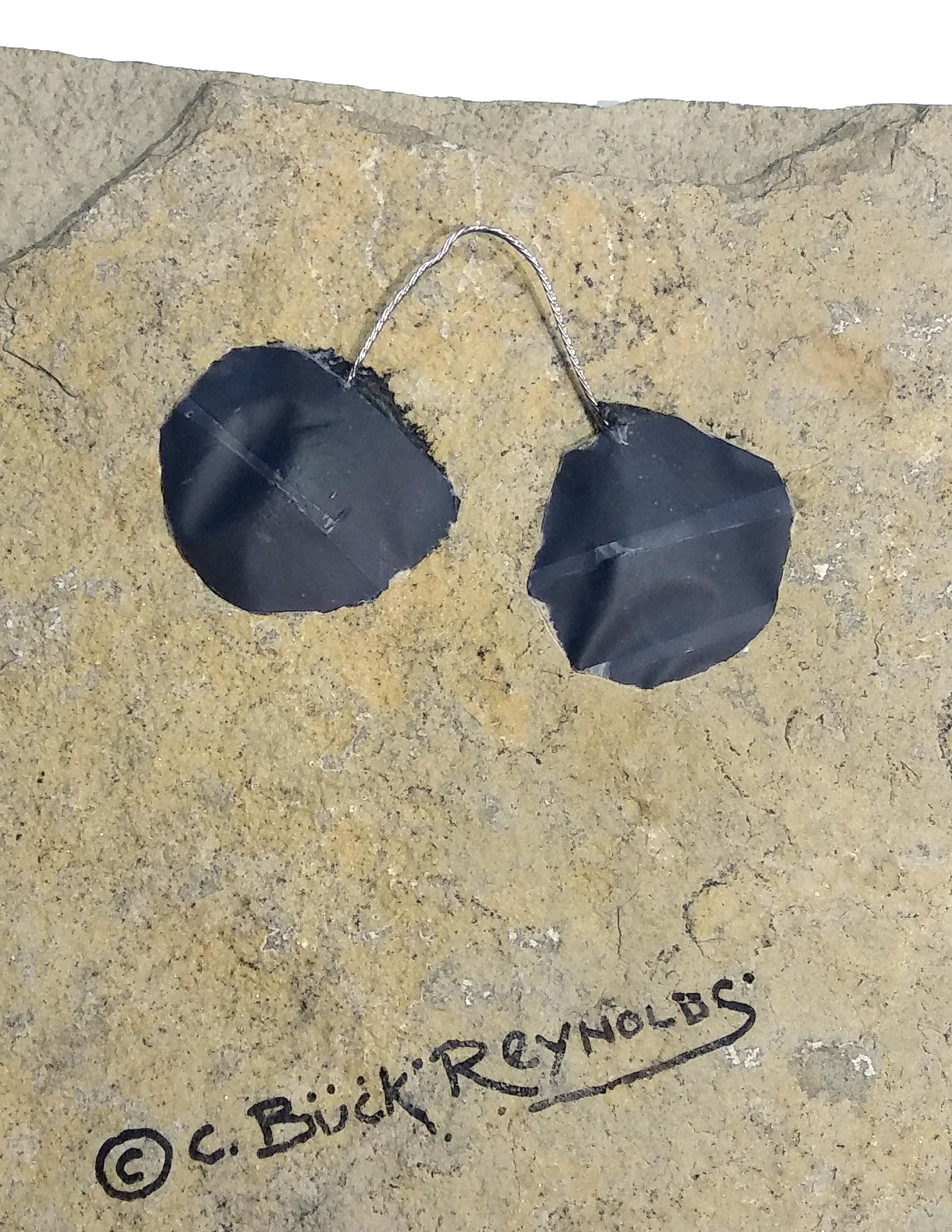
Once the painting is dry, flip it over and attach a hanging wire to the back towards the top. I use 60lb. braided hanging wire in approximately a 5 inch piece.
I use PC7 stone epoxy to adhere the wire to the stone and tape it down so there is good contact during the epoxy curing. Give that a day or two to set and you can hang your painting anywhere.
 Buck Art